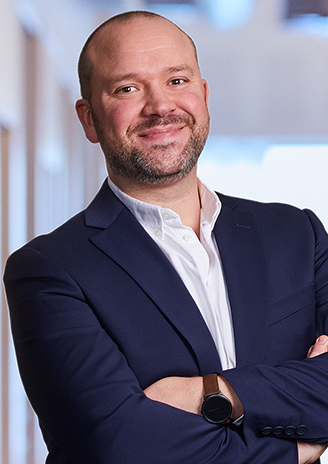
“Analysis is part of our compass towards competitiveness and net zero”
As Sweden’s manufacturing industry faces one of its biggest transitions ever – rapidly reducing CO2 emissions while strengthening its competitiveness and resilience – the question of where efforts are most effective becomes central. This means that analysis is not an interesting side track, but plays a fundamental role in the programme’s mission.
We meet the programme’s analysis strategist, Klas Cullbrand, for a conversation about why analysis is crucial, what is happening and how the work will pave the way for a strong and sustainable Swedish manufacturing industry.
Why is analysis so important for Net Zero Industry?
– For me, analysis is not something we do on the side – it is our compass. When we talk about accelerating the transition in the manufacturing industry, we are talking about huge systems, complex value chains and major economic decisions. It is not enough to go with your gut feeling or make general assumptions. We need to know where emissions actually occur, which parts of the value chain drive them and what obstacles are preventing faster progress. With this knowledge, we can direct our efforts where they will make the biggest difference. Without it, we risk putting our resources into the wrong things. In short, analysis is part of our compass towards competitiveness and net zero emissions.
One way to gain knowledge is to collaborate with Statistics Sweden to map emissions. What is the goal of this work?
– We need a solid foundation to understand industry emissions – otherwise, we are groping in the dark. And here, we receive valuable support from working with Statistics Sweden. Only when we have the full picture can we design calls for proposals and other initiatives that really hit the mark.
How is the analysis work linked to the programme’s mission?
– The mission is ambitious, and the analysis is part of how we will approach it. As a programme, we want to enable and contribute to a competitive and resilient manufacturing industry that achieves net-zero emissions by 2040. It is a big task. To succeed, we need to understand which solutions have the greatest potential, which economic drivers influence companies’ decisions, and which organisational or structural barriers are slowing down the transition. The analysis helps us to see what is possible, what is difficult and what requires completely new approaches. It gives us direction and precision that enables us to increase the pace towards our mission.
There are ideas about working with a comprehensive mapping of drivers and obstacles. What do you think this could reveal?
– We want to understand why the transition is not happening faster – and what would actually get it going. There is a lot of talk about obstacles and drivers, but often at a fairly general level. We would like to move from anecdotes to data. What is it that is actually slowing things down? By mapping this in a structured and quantitative way, we could create a much clearer picture of where the bottlenecks are and what is needed to to solve them.
To summarise, why does Net Zero Industry work with analysis?
Fundamentally, it is about ensuring that Sweden continues to have a thriving manufacturing industry in the future, which has been one of the most important building blocks of our prosperity. But the industry is facing a huge transition, and analysis helps us understand how we can best enable that journey. It’s not just about the climate – it’s also about future jobs, innovation and Sweden’s role in the world – and time is running out if we are to succeed in time. And we can’t afford to guess. Analysis gives us precision, insight and direction. It enables us to design initiatives that really make a difference – for the competitiveness of industry, for the climate and for Sweden. That is why analysis is one of our most important tasks, concludes Klas.