How Sweden’s automotive industry can drive Europe’s competitiveness
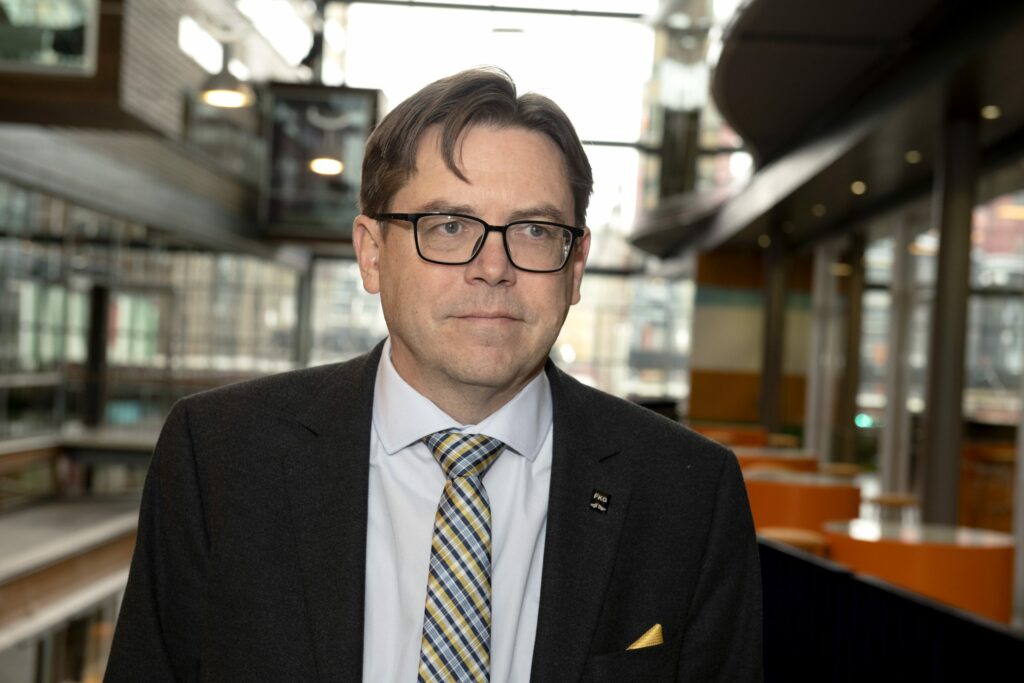
Peter Bryntesson is CEO of FKG and a board member of CLEPA, the European umbrella organization for automotive industry suppliers. He is also a key player in Net Zero Industry’s program forum.
When Europe’s industrial policy is shaped in Brussels, the Swedish automotive industry is at the table. Peter Bryntesson is among those driving a faster transition through his roles within the European industry association CLEPA. On September 12, 2025, the industry held a strategic meeting with European Commission President Ursula von der Leyen, bringing together several vehicle manufacturers, ACEA, and CLEPA to discuss the future of the sector.
– We can’t manufacture and sell vehicles the way we did 30 years ago. We need to think differently about production, organization, and strategy, says Peter Bryntesson.
Europe’s competitiveness under pressure
In a widely discussed report published in autumn 2024, Mario Draghi, former President of the European Central Bank, identified the three most important factors for strengthening the EU’s competitiveness: increased innovation, lower energy costs, and greater independence and security. At the same time, the report warned that Europe is falling behind.
The automotive industry plays a key role in boosting Europe’s competitiveness, but progress remains too slow. A follow-up study by CLEPA and Roland Berger reveals that the sector could lose more than 300,000 jobs if it continues its current path. In addition, European suppliers are 15–35% more expensive than competitors outside the EU. In short, we must become both more efficient and more cost-competitive.
Innovation and collaboration – keys to success
Success depends on an innovative ecosystem where ideas can be tested quickly and where industries intersect. Peter Bryntesson emphasizes the importance of thinking beyond traditional boundaries, breaking down silos, and leveraging AI to streamline both production and product development.
– We can’t just keep digging where we stand. Many of tomorrow’s solutions will come from start-ups and cross-industry collaborations. Two worlds must meet, he says.
He points to companies such as Voi and Klarna, not for their products, but for their approach to digitalisation, scalability and rapid development. In contrast, the automotive industry still operates within traditional structures that slow down innovation.
Sweden’s role in the transition
The Swedish automotive industry is well positioned to lead the way. We have strong industrial clusters, world-class technical expertise, and a long-standing tradition of collaboration. But more is needed.
– We must dare to think outside the box. It’s not just about technology but about setting ambitious goals and being open to different solutions, he says.
Bryntesson suggests that projects should be guided by impact goals, such as increasing competitiveness by 20%, rather than locking themselves into specific technical solutions. This gives engineers and developers the freedom to identify the best paths forward.
A concrete example is how AI can revolutionize product development. An AI agent can, for example, simulate 25 million design variations for wind deflectors in a single week – compared to 100 using traditional methods. This opens up enormous efficiency gains. If companies like Volvo and Scania also can share standardized components, such as wind deflectors, the potential savings are significant. But achieving this requires rethinking design and collaboration models.
The physical design of factories is another bottleneck that, an area that previously has received little attention. Many were built in the 1960s and 1980s and are not adapted to today’s needs. Flows, collaboration, and innovation are directly affected by how the factory is designed. Modernization offers great potential for efficiency improvements.
Regulations as enablers
Political uncertainty, tariffs, CO₂ requirements, and a lack of long-term thinking create challenges. At the same time, there are opportunities in areas such as recycling, where laws and regulations need to be reviewed. Today, many materials that could serve as valuable resources are classified as waste – batteries being a prime example.
– If the goal is to make recycling cheaper than manufacturing new products, regulations must be adapted accordingly, he says.
For decision-makers, this means creating conditions for faster testing and implementing regulations that drive change. For industry, it requires the courage to break old patterns and embrace new approaches.
Net Zero Industry – a catalyst for change
Net Zero Industry is a key enabler in the transformation of Sweden’s manufacturing sector. The program ensures that innovations don’t remain confined to laboratories or pilot projects, but reach industry and make a real impact. Peter Bryntesson also emphasizes that the program helps maximize the value of public investments.
– We have an important role to play in ensuring that insights and innovations reach the whole country, from Eksjö to Luleå, he says.
Building an innovative ecosystem is not just about technology. It is about culture, leadership, and the ability to take calculated risks at the right time. In such an ecosystem, large corporations, small businesses, academia, and the public collaborate to rapidly turn ideas into reality.
Resilience, openness, and collaboration are crucial. We must dare to invite new perspectives –from other industries, start-ups, and unconventional ways of thinking. That is how we strengthen Sweden’s competitiveness, he concludes.