On the road to net zero – Ola Isaksson on two perspectives that are crucial for the future of industry
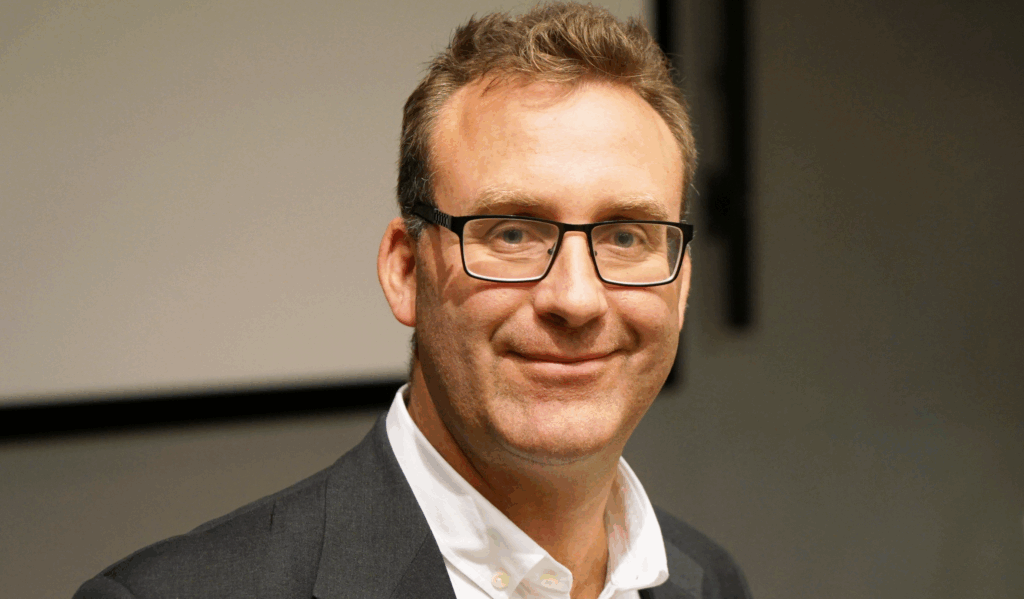
Sweden is facing one of its most extensive industrial transitions, with the goal of creating a sustainable and competitive industry that can meet challenges in climate and resilience. But behind the challenge lie complex questions about how the change should take place in practice. Ola Isaksson, professor at Chalmers University of Technology and member of the Net Zero Industry forum, believes that it is not just about technology – but about culture, collaboration and the ability to think both short-term and long-term – at the same time.
Ola Isaksson is a professor of product development at the Department of Industrial and Materials Science at Chalmers University of Technology and has extensive experience in research. However, he began his professional career with a 20-year specialist career at GKN Aerospace Engine Systems (formerly Volvo Aero). With his dual perspective, he sees strengths that can help the manufacturing industry in the transition. We had a long conversation with Ola about how he views the possibilities of achieving net zero and the role of academia in Sweden’s success as a country.
A unique strength that must be safeguarded
Swedish industry is characterised by openness and close collaboration between academia and business – a competitive advantage that risks being taken for granted. In contrast to countries where legal barriers and closed structures dominate, Sweden’s culture of trust creates better conditions for shared learning.
“Our openness is unique. If we lose it, we lose one of Sweden’s greatest strengths,” he says.
Ola believes that this open culture is a competitive advantage that we risk taking for granted.
“We are used to working together, knowing each other and always expecting openness. This collaboration is based on trust and understanding of how both academia and industry benefit from open dialogue. Respect for business-critical factors that researchers must take into account is a given, but learning about fundamental issues such as the transition to Net Zero is strengthened if more people can take part in it.
A strong opportunity for success with Net Zero Industry
Ola sees the Net Zero Industry programme as more than just technical projects – it is about changing the entire industrial system.
“The easy gains have already been made. Now the difficult 50 per cent remains: structural changes in the ecosystem. The challenge is about culture, competence and working methods. I believe that Net Zero Industry must act as a catalyst for learning, not just as a project platform. Industry, academia and social actors have different roles, but all are needed to achieve the goal. This is the key to competitiveness!
Two time perspectives – a balancing act
One of the biggest challenges for the system is to simultaneously manage two parallel time perspectives. Companies often experience tough competition and have to relate to a quarterly economy where results must be visible immediately, while academia works with knowledge building that is strengthened through continuity over several years.
If we only pursue quick results, we risk missing out on the long-term knowledge development that builds lasting competitiveness. That is what creates real transformation. We must be able to keep both the short-term and long-term perspectives in mind at the same time – both in industry and academia. It is easy to measure whether you have built a machine or run a test, but what is crucial for innovation is what you learn along the way. People who are involved in future solutions, such as doctoral students and researchers (both in industry and academia), build a deep understanding of both vision and potential, and develop the ability to realise it even after the research effort has been completed.
He illustrates this with an example from his time in industry:
“The people who experience the needs and solve daily problems, for example in production, are used to solving problems immediately. It was often difficult to have a dialogue about what problems were expected to arise “in a few months”. In dialogue, it is easy to get a list of what needs to be done by Friday, but predicting problems in a few months’ time was difficult. The consequence was often that problems were solved in the moment, but they often recurred. People who work strategically and comprehensively with important issues over time, on the other hand, are less likely to work directly with short-term problem solving. The solution is to respect both short- and long-term problems, not just one or the other.
Learning as the key to innovation
Innovation is not just about building new machines or demonstrators. The real impact comes from learning and the insights that develop along the way.
Achieving Net Zero is partly about building on what we already know and developing our skills, but it is just as much about developing knowledge and insights that no one else has. It is only when we transform these new ideas into products, processes and solutions that we take real steps forward. What determines whether we succeed is how we utilise what we learn. We must dare to fail and draw conclusions from it. If we do not value research and knowledge development, we will be left behind. We need mechanisms that ensure learning and build strong individuals who can drive change over time. When research works, it often provides insights into how problems can be solved in a completely new way. However, learning the new way requires learning and gaining experience. Otherwise, we rely on the way we have done things before, even if it does not drive change. These insights often give rise to new businesses and companies! Building on process knowledge, such as how to manufacture advanced products, is also the basis for how future products and production technology can be developed.
AI and new ways of working – a hidden challenge
Ola also highlights how new technologies such as AI are changing ways of working and placing new demands on skills.
“The technology itself is not the problem, other than the fact that it is developing rapidly. The challenge is to understand how we should handle and, for example, work with questions to LLMs such as ChatGPT in order to use it correctly. Previously, we built up knowledge step by step, whereas now we get a ready-made solution in ten minutes. It looks good, but the result is an “image” that must be critically examined. We must maintain a critical approach and develop methods for using the technology in a healthy way.
A balanced ecosystem
According to Ola, the industrial transition of the future requires a holistic perspective. It is about seeing the entire ecosystem – industry, academia, education and society – and creating structures that support both short-term benefits and long-term knowledge building.
“We don’t need a bigger combine harvester – we also need seeds and cultivation, fertilisation and thinning. We must invest in learning and knowledge development in both the short and long term, otherwise the transformation will remain an illusion. We have good conditions in Sweden, but we must see how different actors interact and together contribute to what we need to achieve,” he concludes.