ReNoWo 2
Healthcare’s growing dependence on fossil‑based non‑woven products is accelerating both climate impact and supply‑chain vulnerability, with consumption increasing by an estimated 7–8% annually. The ReNoWo feasibility study confirmed substantial obstacles to recycling these materials, including complex multi‑layer compositions and the absence of suitable collection and processing infrastructure. At the same time, the study demonstrated that transitioning to recycled or bio‑based inputs can yield significant climate benefits. A coordinated system approach—combining improved collection, mechanical and thermochemical recycling technologies —has the potential to reduce emissions and strengthen supply resilience for more than 2,000 tonnes of non‑woven waste each year.
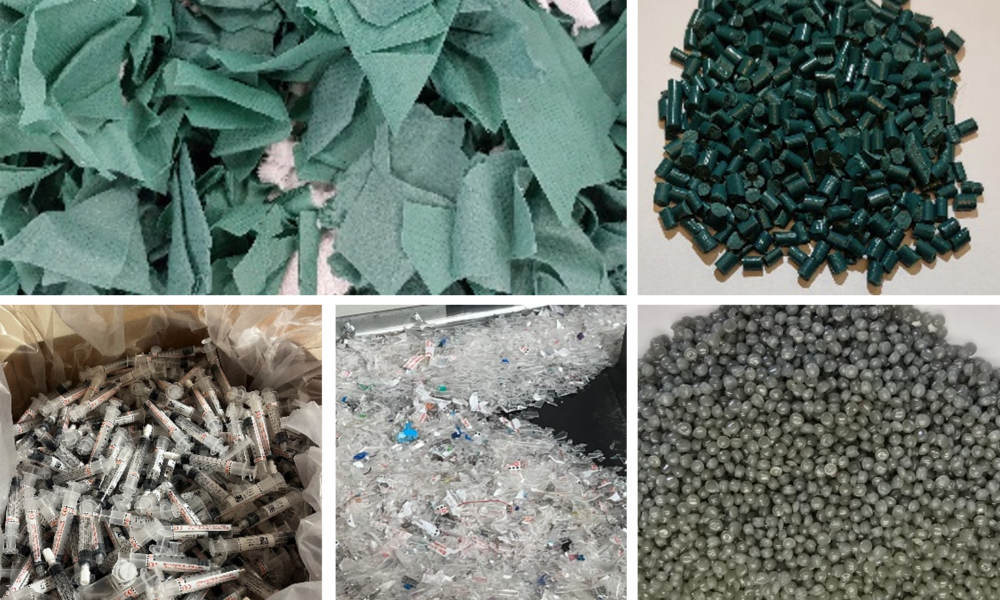
This project will assess how regions can organise effective collection of both non‑woven materials and single‑use plastics, as well as evaluate the performance and feasibility of advanced recycling methods, including mechanical processing, pyrolysis, and steam cracking. The work will also examine how centralised sorting solutions for hospital waste can be designed to maximise efficiency, and will include practical trials to produce new non‑woven materials from collected waste streams. Updated life‑cycle assessments (LCAs) will provide comparative climate analyses of different recycling pathways versus today’s incineration‑based system.
By engaging stakeholders from across the entire value chain—material producers, healthcare organisations, waste operators, and recycling companies—the project creates a robust platform for validating circular, scalable, and climate‑efficient solutions in real operational environments.