SIWash – Resource-Efficient and Sustainable Industrial Cleaning
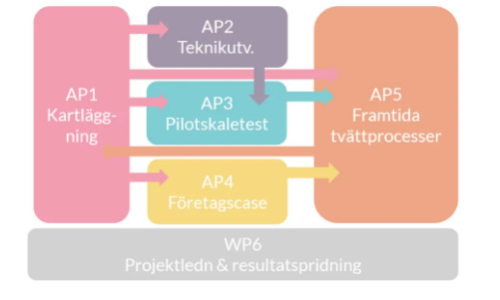
The purpose of SIWash is to reduce climate impact by lowering the CO₂ footprint of industrial washing processes by 75% by the year 2040. This will be achieved by extending […]
The purpose of SIWash is to reduce climate impact by lowering the CO₂ footprint of industrial washing processes by 75% by the year 2040. This will be achieved by extending […]

Most end-of-life textiles, especially polyester, are blended with elastane, dyes, and other chemicals, making them impossible to recycle at scale. Mechanical recycling methods degrade fiber quality, while chemical methods require […]

The aim of ROAR – Resource efficient and resilient recirculation of products and components is to support manufacturing companies to become more resource-efficient and resilient through recirculation of products and […]

The amount of textile waste consisting of polyester–cotton blends (polycotton) is close to one hundred million tonnes annually, most of which is currently incinerated or sent to landfill. The household […]

Healthcare’s growing dependence on fossil‑based non‑woven products is accelerating both climate impact and supply‑chain vulnerability, with consumption increasing by an estimated 7–8% annually. The ReNoWo feasibility study confirmed substantial obstacles […]

Sheet metal stamping is a cost-effective and widely utilised manufacturing process across numerous industries. However, maintaining consistent quality remains challenging due to variability in material properties and process conditions, often […]

RES2AM is developing a modular, reconfigurable industrial system for large-scale Laser Powder Bed Fusion (PBF-LB). The project tackles Sweden’s Net Zero Industry ambitions by reducing material waste, energy use, lead […]

The Project aims to evaluate the business case for bio synthesis of styrene for Zero Emissions rubber materials used in, for example, car tyres and many other applications, using captured […]

The project aims to increase the share of secondary raw materials and reuse of textiles at a time when global resources are becoming increasingly limited and both consumers and authorities […]

RE-PCB is a springboard to gather momentum for change towards the mission of achieving, by 2040, Net zero greenhouse gas emissions in the manufacturing of Printed Circuit Boards (PCBs) and […]