Turning Carbon Dioxide into a Solution for the Textile Industry
The textile industry is characterised by high resource consumption, growing volumes of waste, and limited levels of material recycling. Today, large quantities of textiles are incinerated, while technical barriers make it difficult to recycle materials on an industrial scale.
Despite the fact that much of the material could be reused, scalable solutions capable of handling the complex material flows of modern textile production are often lacking. As a result, valuable resources are lost. Textile production also remains highly resource-intensive, particularly in terms of water and energy use. The industry’s significant water consumption further increases its environmental impact and highlights the need for new approaches to both textile production and waste management.
A New Path for Textile Recycling
In response to these challenges, Renasens is developing a textile recycling method that transforms textile waste into new fibres using carbon dioxide. The process is based on a selective purification method using subcritical CO₂ technology, where elastane and residual dyes are removed to enable the recycling of textiles that are currently rarely recycled as materials, despite their potential to be reintroduced into new material streams.
According to Renasens, the climate potential is significant on several levels. Polyester accounts for more than 50 per cent of global fibre production and is a major reason why large volumes of synthetic textiles are sent to incineration. Every kilogram of recycled polyester can replace virgin polyester produced from fossil-based raw materials.
The company also highlights that the process is water-free and avoids the use of strong solvents such as DMF, a substance classified as a Substance of Very High Concern (SVHC) under the EU REACH regulation. The process consists of three stages within a flexible and modular system. First, dyes and coatings are removed; second, the material is cleaned; and finally, the fibres are mechanically separated so they can be reused as raw material. The system can be adapted to different textile types and processing volumes, which is essential for industrial-scale deployment. The water-free process reduces resource consumption in an otherwise water-intensive industry, while preserving fibre quality and optimising energy use throughout the process.
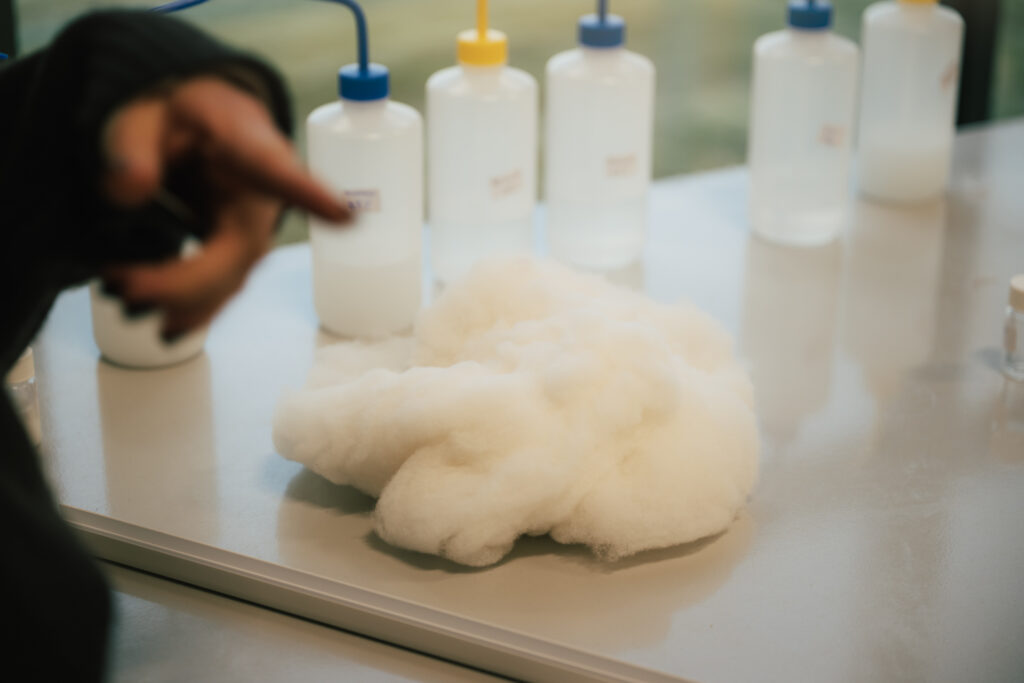
“The exact climate benefit has not yet been quantified, but the process requires fewer fossil-based raw materials, has a lower energy intensity than chemical recycling, and generates no wastewater requiring treatment,” says Jade Bouledjouidja, Founder and CEO of Renasens.
Renasens emphasises that the water-free technology offers significant technical and environmental advantages. In practice, these revolve around three key strengths:
- It eliminates the need to treat process water, one of the most resource-intensive and costly aspects of today’s textile industry.
- Carbon dioxide can be circulated in a closed-loop system, minimising losses and improving resource efficiency.
- The process is highly selective. By adjusting pressure, temperature, and additives, dyes and elastane can be removed without degrading the fibre itself.
This preserves material quality and enables fibres to be reused in more demanding applications.
Bouledjouidja stresses that this selectivity is critical, as the fibre remains intact, unlike in chemical recycling processes that break the material down and require it to be rebuilt from scratch.
By reducing the need for virgin raw materials and lowering greenhouse gas emissions, the solution has the potential to contribute to a more circular and resource-efficient textile industry, where the focus shifts towards making smarter use of existing resources. The greatest opportunity lies in unlocking material streams that are currently not recycled at all. Textiles containing polyester, elastane, and dyes—common in sportswear and fast-fashion products—are often rejected because they can damage recycling equipment and reduce material quality. With an effective purification process, this waste could instead become a high-quality feedstock for new fibres.
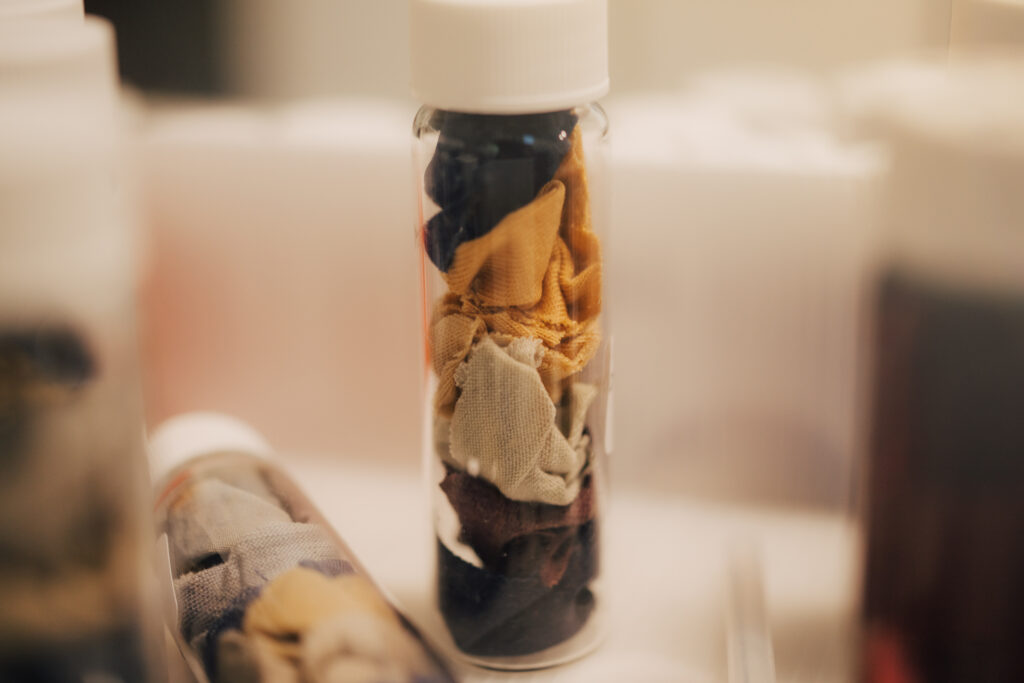
“This is not an incremental improvement; it is an entirely new element in the value chain that has been missing until now,” says Bouledjouidja.
At the same time, Renasens is working to integrate the technology into existing value chains, which requires collaboration among stakeholders from sorting and collection to production. According to Bouledjouidja, the technology could play an important role early in the value chain, for example as a pre-treatment step carried out by sorting facilities or specialised operators before materials are sent for recycling.
This changes the logic of the entire value chain. Sorters can deliver cleaner and more precisely specified material streams, recyclers can accept a broader range of textile fractions, and brands can continue using elastane without locking materials into a linear model.
However, she emphasises that widespread adoption will require several parallel efforts, including:
- Pilot-scale validation of the technology.
- Increased availability of sorted post-consumer textile waste, currently a major bottleneck that the EU’s textile sorting requirements are expected to address.
- Economic incentives, such as Extended Producer Responsibility (EPR) funding, to make investment in pre-treatment more attractive than incineration.
The project also demonstrates how Net Zero Industry’s open call for proposals, through targeted funding, helps create conditions for combining climate benefits with industrial development and competitiveness.
Project period: 11 October 2025 – 11 October 2027
Project title: A Selective Purification Process for Removing Elastane and Residual Dyes from Textile Waste Based on Subcritical CO₂ Technology – Net Zero Industry